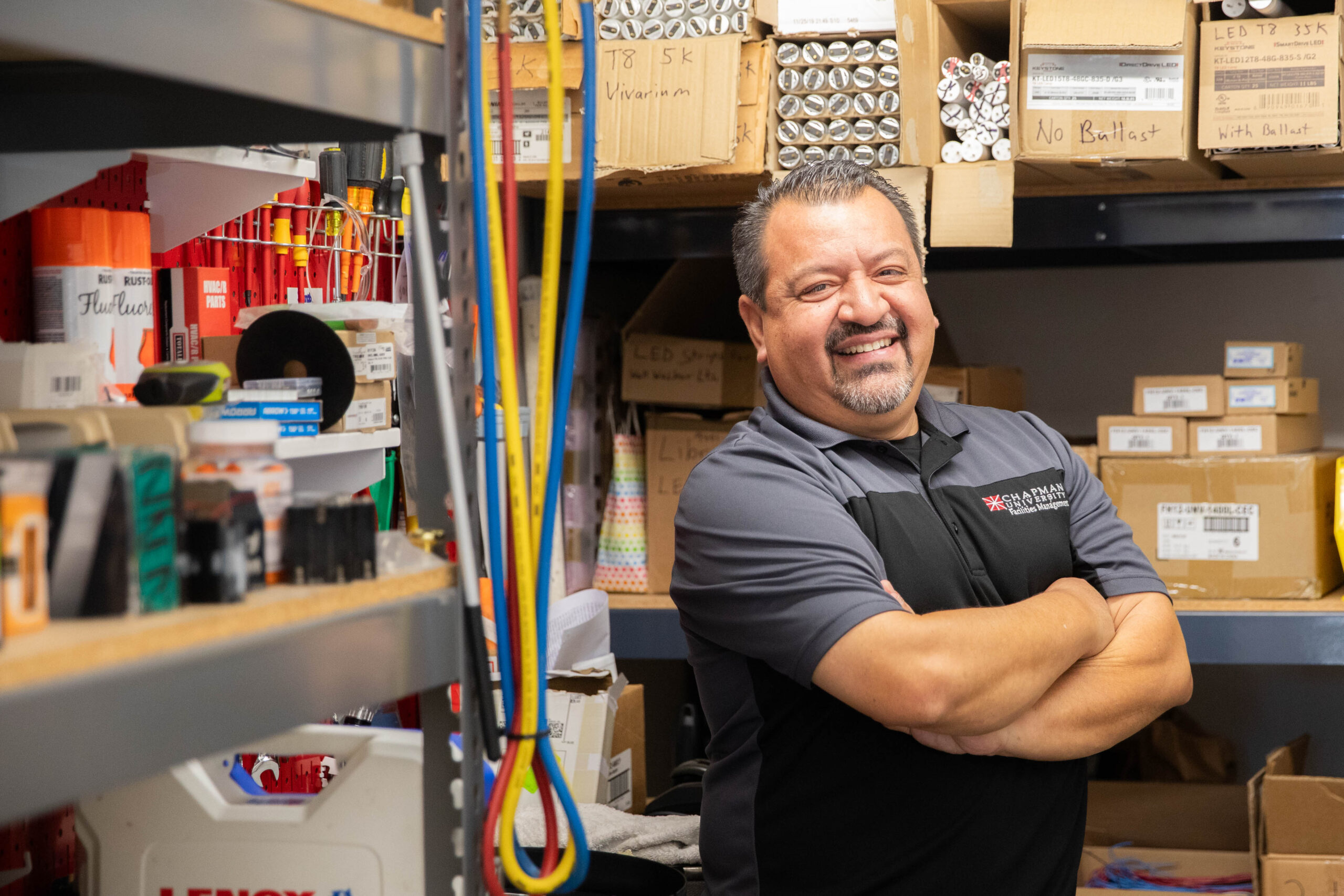
Vicente Zuniga oversees every system at Chapman University’s Rinker Health Science Campus.
Plumbing, HVAC, event setup, landscaping. You name it, he’s done it. Mostly, he’s done it alone.
His job is staying ahead.
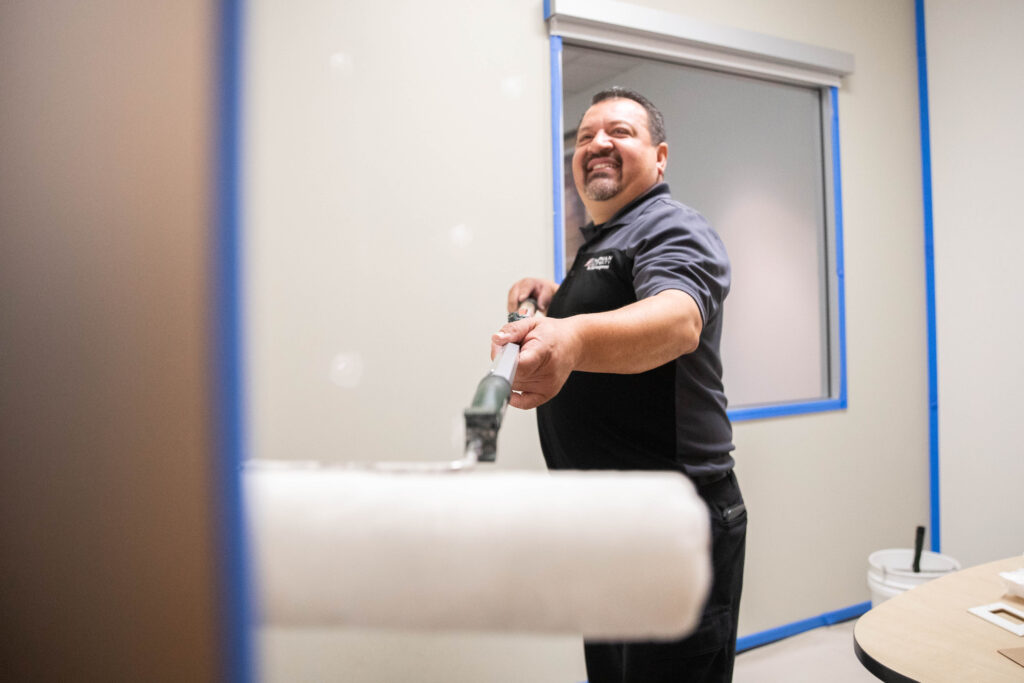
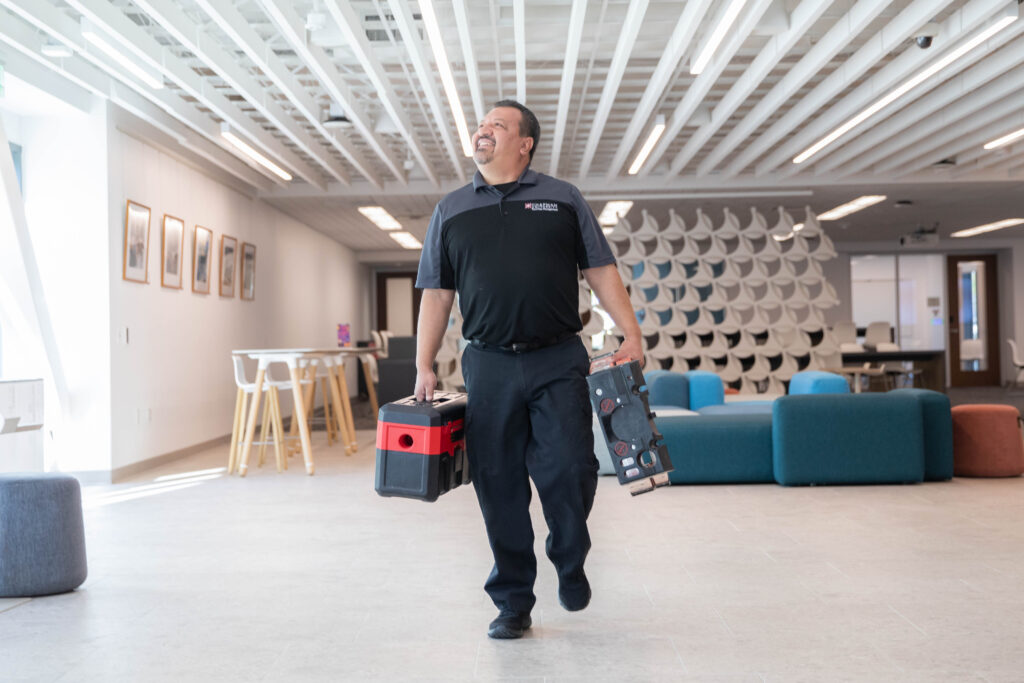
This morning might start with hanging degrees on walls. By afternoon, he could be on a roof checking for leaks, coordinating with contractors about air conditioning maintenance, or setting up an event space. Tomorrow might bring a toilet repair, a grease interceptor inspection, irrigation problems.
A screwdriver, notepad, and pen stay in his pocket.
He goes with the flow. But he’s always ready.
Six Months Ahead
Most people think about maintenance when something stops working. Zuniga thinks about it six months before that happens.
“A lot of my work is preventative maintenance,” he explains. “You have to stay on top of it because it can go south pretty quick.”
Nothing lasts forever. Water heaters will eventually fail. Air filters will clog. Roofs will leak. But the care makes the difference. Water heaters get flushed every six months instead of replaced every five years. Filters get changed on schedule. Roof inspections happen before the rain arrives, not during it.
He coordinates with vendors, schedules work around classes, and maintains a calendar that tracks each piece of equipment across all buildings.
His father taught him this approach—working all day, then coming home to maintain the house so nothing would cost an arm and a leg to fix. Zuniga watched him stay ahead of problems.
Now he does the same.
“If everything is running perfectly, then we’re doing our job right,” he says. “It’s our responsibility to check on stuff and try to avoid these issues.”
The philosophy extends beyond mechanical systems. During heavy rain last season, before the roof was replaced, he’d arrive at campus to pull ceiling tiles, cover equipment with plastic, even build a trough system to channel water into trash cans. He worked seven days a week during those storms.
The roof would leak again. The storms would return. But showing up mattered.
Most people never knew.
The Empty Campus
When the pandemic emptied Rinker in 2020, Zuniga didn’t stagnate. He took it as an opportunity to get better at his job.
Without students and faculty filling the buildings, he painted classrooms and offices. He spent hours learning the HVAC automation system—how to program schedules, adjust temperatures remotely, shut down equipment when buildings were empty. Now he uses those skills constantly. When groups reserve spaces, he checks their schedule and adjusts climate control before they arrive. He monitors systems from anywhere, catching problems before they escalate.
The empty campus became a classroom.
The isolation became opportunity.
“I Am Rinker”
Zuniga’s office sits inside Rinker’s open workspace. He crosses paths with students, faculty, and staff constantly. They know his name. They stop him with requests—hang a plaque, fix a leak, adjust a thermostat.
“I try to make every day fun,” he explains. “I have to go with that mentality to continue doing what I do.”
The fun comes from knowing his work matters. When he walks into a classroom and lights are on, systems are running, and no one is complaining, that means something. What he does behind the scenes helps students, faculty, and staff avoid interruptions.
He was named Employee of the Year by Rick Turner, Vice President of Facilities Management, in 2022. “Vicente is a hero,” Turner says. “For Rinker, and for me.”
But recognition isn’t why he works six or seven days a week. He works that way because he identifies with the place itself.
“I am Rinker,” Zuniga says. “I have a connection to it. It’s my responsibility to make sure everything runs smoothly here.”
He knows this role won’t last forever. The campus will change. Someone else will eventually walk these halls. But right now, for these students, for this community, he tends to what needs tending.
That responsibility weighs on him sometimes. When pressure builds, he walks the neighborhood surrounding campus to decompress.
During those walks, he’s checking the landscape, looking for the next thing to fix.
Built to Last
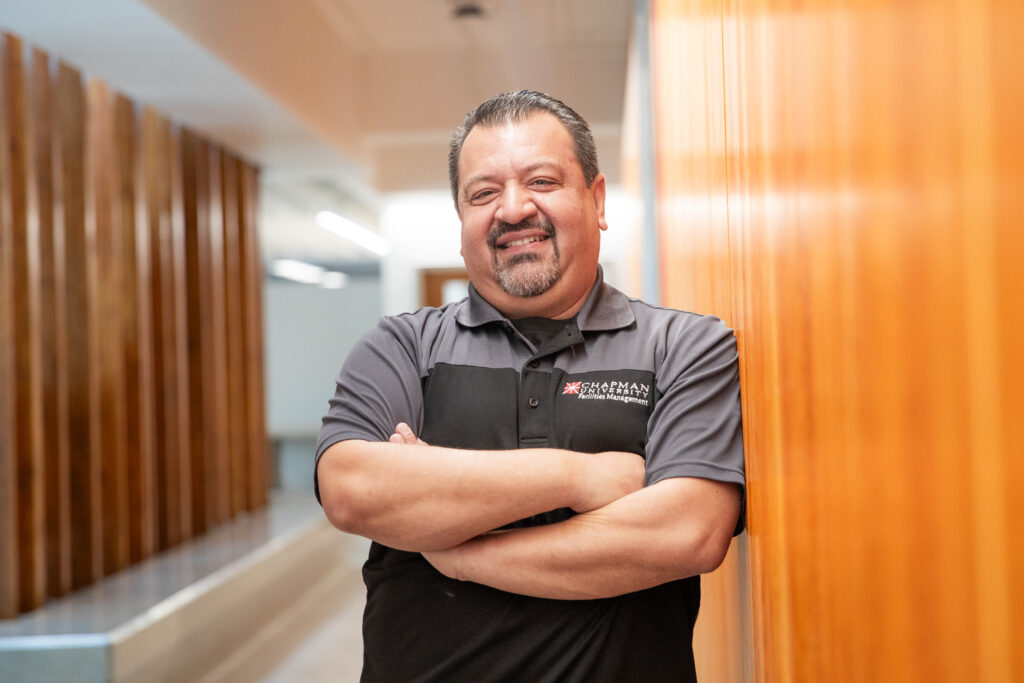
Zuniga is finishing his second-to-last class for his Certified Facility Manager certificate. Chapman supports his coursework.
“The whole goal for me is to grow within Chapman,” he says.
His daughter started her second year at Chapman, using the tuition benefit Zuniga earns. His son graduates high school next year and will attend an affiliated university with the same benefit. Outside work, he slows down with golf and his koi pond. But most weekends find him taking side jobs with his C36 plumbing license, helping homeowners with repairs and renovations.
The person everyone depends on rarely stops working.
Systems will fail. Roofs will leak. Buildings will age. But the attention paid—the care given—creates something that matters beyond the temporary fix. Not permanence. Something better: the knowledge that while things ran smoothly, someone cared enough to notice.
“I take pride in what I do,” Zuniga says. “Being behind the scenes and making everything possible—most people never see what goes into running a campus. But it’s a great feeling knowing our work supports the entire community.”
Story by Brian Belardi | Photos by Andrew Castro